project

Planting forest gardens in Uganda

location

Location

Region

The Local Landscape

The community impact

The change

Type your paragraph here

Type your paragraph here

the science

Many parts of Uganda have lost tree cover due to decades of intensive farming, fuelwood collection, and population pressure. When trees disappear, soils lose organic matter, water evaporates more quickly, and crops become less reliable. This creates a cycle where families must clear more land just to maintain the same harvest.

Degraded soils store far less carbon and support fewer species. Without tree roots to stabilise the ground, erosion increases and nutrients wash away. This weakens ecosystems and reduces biodiversity, making landscapes less resilient to climate change.

For future generations, the loss of healthy soils and tree cover means reduced food security, fewer wild species, and landscapes that struggle to recover from droughts and storms. Restoring tree‑based systems is essential for long‑term climate stability and ecological health.

how it works

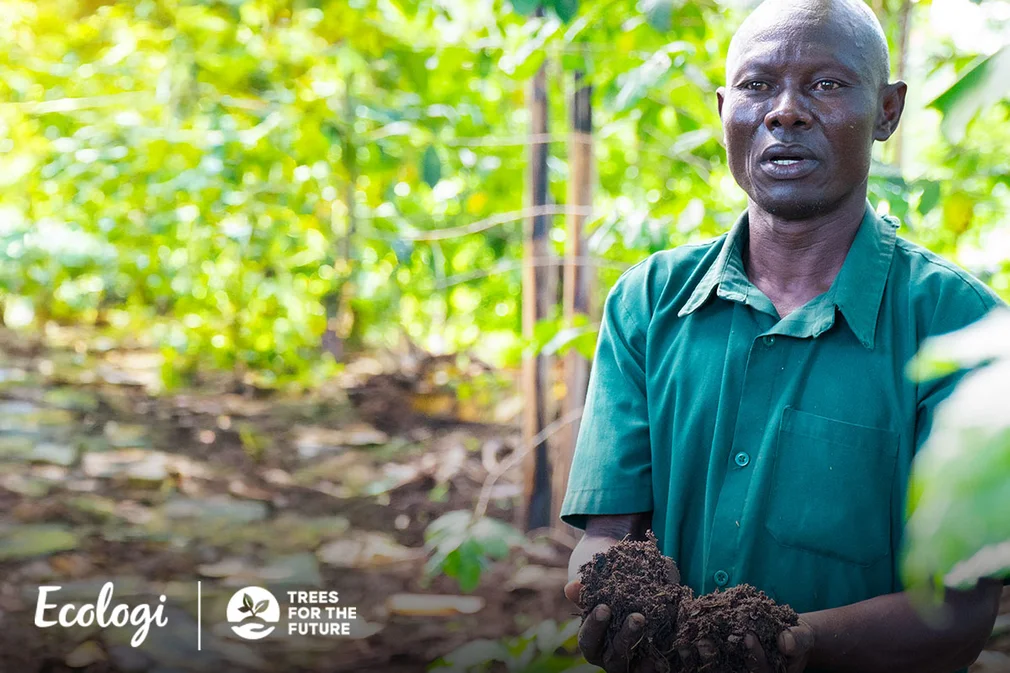
Forest gardens are created by planting a carefully chosen mix of fruit trees, nitrogen‑fixing species, vegetables, and shrubs. These plants work together to rebuild soil structure, increase shade, and create a micro‑climate that supports healthy growth. Over time, the system becomes self‑sustaining, much like a natural forest.

By increasing tree cover, the project stores carbon, reduces erosion, and improves water retention. Families gain reliable harvests of fruit, nuts, and vegetables, reducing pressure to clear new land. This approach also protects remaining natural forests by providing alternative sources of food, fuel, and income.

The method is evidence‑based and widely used across East Africa. Forest gardens are proven to boost biodiversity, strengthen community resilience, and create long‑term environmental benefits without relying on intensive inputs.